Orange's primary challenge was the need to rapidly modernize regional N x 10GE links to the 100GE standard between aggregation nodes. The operator was looking for a solution that would enable a smooth bandwidth increase without drastic rebuilding of the physical transport layer or the purchase of expensive muxponders. These nodes are a critical element of the network collecting traffic from access devices, where bandwidth demand grows exponentially with the development of 5G services and fiber internet.
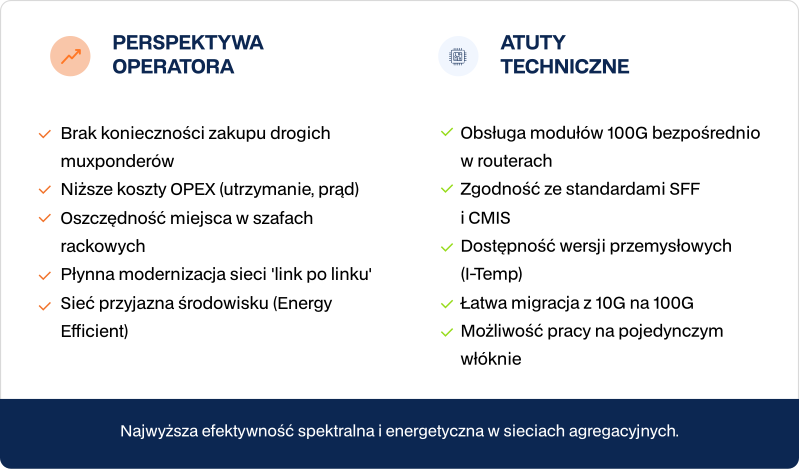
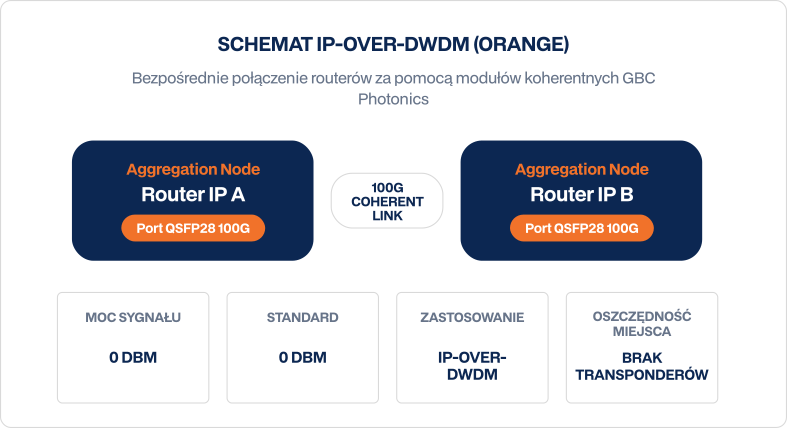
Instead of a classic DWDM network expansion, the chosen approach was based on the IP routing concept. The 100G QSFP28 0 dBm coherent modules were installed directly in the routers, bypassing external transponders.
"Eliminating external transponders means not only lower deployment costs, but also cheaper maintenance, lower power consumption, and savings in precious rack space."
These modules are fully compatible with the SFF standard for currently deployed devices and CMIS for the next-generation operating systems, ensuring a safe path for future network development.
Thanks to the deployment of GBC Photonics technology, the Orange network is faster and ready for full implementation of 5G services. The modernization is carried out flexibly — "link by link" — which allows for optimal management of the investment budget.

The GBC Photonics coherent portfolio is now expanding with industrial-grade modules (I-Temp: -40°C to +85°C) and single-fiber solutions, with 800G units already available in the lineup.
The Orange case study proves that coherent modules are the future of modern aggregation networks.